What are the differences between acrylic, gel, and Polygel?
One of the main differences between acrylic, gel, and Polygel is how each material is applied and cured.
An acrylic system combines acrylic powder with a liquid monomer. When the two components are mixed, they form a workable acrylic bead that can be sculpted on the nail. The material polymerizes and hardens without the need for a UV or LED lamp.
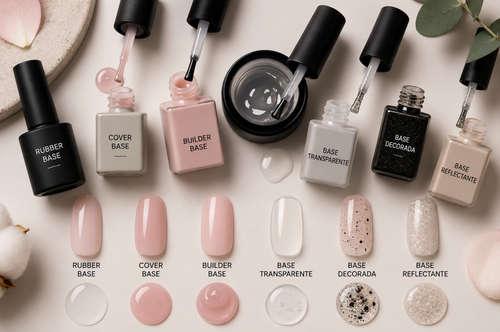
Builder gel is a ready-to-use material that remains workable until it is cured under a compatible UV or LED lamp. It can be used to strengthen natural nails, correct nail architecture, and create extensions.
Polygel combines some of the working characteristics of acrylic and gel systems. It has a thick, moldable consistency, does not require acrylic powder to be mixed with monomer, and cures under a UV or LED lamp. During application, the material is shaped with a brush moistened with a suitable slip solution or other liquid recommended by the manufacturer.
Acrylic, builder gel, and Polygel therefore differ not only in consistency but also in application technique, curing method, and sculpting characteristics.
Acrylic, gel, and Polygel: comparison of key characteristics
| Feature | Acrylic | Builder Gel | Polygel |
|---|---|---|---|
| Application | Acrylic powder + liquid monomer; requires control of the powder-to-liquid ratio | Applied and shaped before curing under a lamp | Thick, moldable material shaped with a brush and suitable slip solution |
| Strength | High; suitable for strong nail enhancements and extensions | Depends on the type of builder gel; can combine strength with flexibility | High; properties depend on the specific formula |
| Flexibility | Generally more rigid | Depends on the builder gel formula | Depends on the formula and application thickness |
| Curing | Polymerizes without a UV/LED lamp after powder and monomer are combined | UV/LED lamp | UV/LED lamp |
| Sculpting | Suitable for creating precise nail architecture and extensions | Suitable for strengthening, overlays, structural corrections, and extensions | Thick consistency provides good control during sculpting |
| Maintenance | Fill and rebalance as the natural nail grows | Fill and rebalance as the natural nail grows | Fill and rebalance as the natural nail grows |
| Removal | Depends on the system; filing or another manufacturer-recommended method may be required | Depends on the formula: filing or soak-off for products designed to be soaked off | Typically requires filing; the exact method depends on the product |
There is no universal answer to whether acrylic, builder gel, or Polygel is best. The right choice depends on the condition of the natural nails, the desired length and shape, the sculpting technique, and the properties of the specific product.
Which lasts longer: gel, acrylic, or Polygel?
All three systems can provide strong, long-lasting nail enhancements when the natural nail plate is properly prepared, the architecture is correctly built, and the appropriate application technique is followed.
Acrylic is generally known for its rigidity and is widely used for strong nail enhancements and extensions. Modern builder gels can also provide excellent strength, with rigidity, flexibility, and viscosity varying considerably between formulas.
Polygel has a thick, moldable consistency that provides good control while building nail architecture. Its strength and flexibility also depend on the specific formulation.
Wear time is therefore not determined by the material alone. Proper preparation of the natural nail plate, correct product thickness, balanced nail architecture, appropriate curing of builder gel or Polygel, and aftercare can all significantly affect durability.
Which system should you choose based on your nails and desired result?
Builder gel, Polygel, and suitable acrylic systems can all be used to strengthen natural nails. The best choice depends on the condition of the nails, the required rigidity, the desired length, and the application technique.
All three systems can also be used to create nail extensions. Acrylic is well suited to building strong, defined nail architecture, while builder gels are available in a wide variety of formulas, ranging from more flexible products to rigid gels designed for sculpting and extensions.
Polygel is particularly convenient for controlled sculpting because of its thick, moldable consistency. Unlike some more fluid self-leveling builder gels, it stays where it is placed and remains workable until cured under a compatible lamp.
The experience of the nail professional or person applying the product is another important consideration. Acrylic requires practice in controlling the acrylic powder and liquid monomer, while builder gel and Polygel require proper sculpting techniques and correct curing.
Gel, acrylic, or Polygel: advantages and disadvantages
Acrylic is valued for its strength and the level of control it provides when creating nail architecture. However, it requires proper control of the powder-to-liquid ratio and working speed because the material begins to polymerize during application.
Builder gel does not require components to be mixed before application and remains workable until cured under a UV or LED lamp. Different viscosities and formulations make it possible to choose products for natural nail overlays, strengthening, structural corrections, and extensions.
Polygel has a thick, moldable consistency that makes the material easy to control while sculpting. It does not require acrylic powder to be mixed with liquid monomer but, like builder gel, must be cured under a compatible UV or LED lamp.
There is therefore no single system that is universally better than the others. Choosing between acrylic, builder gel, and Polygel depends on the application technique, the condition of the natural nails, the desired architecture and length, and experience with each material.
At NAILSOFTHEDAY, you can find Builder Gels, Polygel, Acrygel, Acrylic Powder, and other professional products for nail strengthening, sculpting, and extensions.
Frequently Asked Questions
Which is stronger: gel or Polygel?
It depends on the specific formulation, nail architecture, and application technique. Professional builder gels and Polygels can both provide excellent strength, so it is not accurate to say that Polygel is always stronger than builder gel.
Which is less damaging to nails: gel or acrylic?
The type of material alone does not determine whether the natural nail will be damaged. Proper nail preparation, correct application, maintenance, and especially safe removal without excessive filing of the natural nail plate are more important factors.
Can Polygel be applied to natural nails?
Yes. Polygel can be used to strengthen and overlay the natural nail without adding extra length, provided this application is compatible with the specific system and the manufacturer's instructions.
Which system is best for weak nails?
There is no single system that is best for every weak or brittle nail. The appropriate material should be selected according to the condition of the natural nail plate, the required rigidity, and the desired length. Builder Gel, Polygel, Acrygel, and other suitable professional systems can all be used to strengthen natural nails.